Animated Airplane / Logistics Explainers
Five-reason map documentaries on why planes fly where they do; the same look fits shipping and logistics
Reference channel: Manicule
 @maniculetv · open channel
Why it works
- One lane carries it: 4 flight-route videos hold 2.50M of 2.51M long-form views (99%). Floodgate (10K in 7 days) and Mediterranean (5.3K) lag.
- Same formula every time: an odd pattern on a globe, 'So why?', five numbered reasons with dates and numbers, a recap, a callback. 8–10 min.
- Proven topics, better craft: 'Atlantic at night' already had 1.48M views on Planet Wonders; Manicule's take still pulled 464K in 2 weeks.
- Craft is the moat: 7 copies of the Antarctica video in 10 days peaked at 1,382 views. The topic is easy to copy; the look is not.
Top videos click to watch
 The Shortcut Over Antarctica No Airline Takes1M views · 10 days ago · 20.7×
 Why Sydney to London Is the Hardest Flight on Earth982K views · 13 days ago · 20.3×
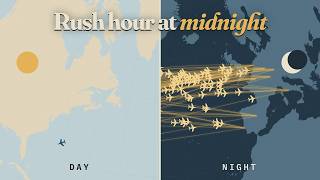 Why Planes Cross the Atlantic at Night464K views · 2 weeks ago · 9.6×
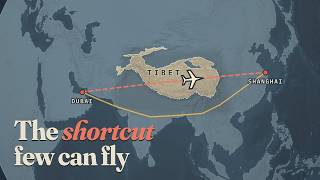 The Shortcut Over Tibet Most Airlines Skip51K views · 4 days ago · 1.1×
 They Called His Floodgate a Waste. Then the Tsunami Came.10K views · 7 days ago · 0.2×
What a copy could earn
AdSense only. NexLev RPM is now $3.05 (was $3.84); 30-day views rose 1.92M to 2.51M.
CompetitionMedium
Topics get cloned in days (7 Antarctica copies in 10 days, best 1,382 views), but few rivals match the craft. Shipping has no atlas-style channel yet: Bridged and How Ships Work look different.
Faceless 2D map documentary. Cold open on a dark navy globe with glowing amber routes; the body mixes navy story maps with warm parchment atlas maps, chapter cards and charts. Serif headlines, typewriter captions, slow draw-on motion.
 ▶ 0:03 Cold open: navy globe, amber Arctic routes, plane icons
 ▶ 0:20 South-polar globe, italic ocean labels, two city pins
 ▶ 1:06 Chapter I card 'Nobody to fly to', I–V tracker top right
 ▶ 2:38 Bar chart: typewriter heading, serif '60 min' value
 ▶ 4:05 Altitude chart: 11 km cruise vs 3 km safe line, amber O2
 ▶ 5:45 Navy story map: Flight 901 date card, route to McMurdo
 ▶ 0:03 Cold open: navy world map, Melbourne and Toulouse pins
 ▶ 1:45 Parchment globe: Antipodes Islands, word-tab tracker
 ▶ 3:14 Atlas map: 1947 Kangaroo Route with '4 days' card
 ▶ 4:50 Fuel curve: red line, amber step bars, dark banner
 ▶ 5:42 Cabin seat map with big serif '238 seats'
 ▶ 8:05 Hatched closed airspace, rerouted Perth–London line
Palette measured from the frames
Signature moves
- 01Cold open on a dark navy globe or world map with glowing amber routes and white plane icons
- 02Chapter cards on parchment: serif headline with one italic accent phrase in steel blue ('Nobody to fly to')
- 03Big serif numbers ('60 min', '4 days', '238 seats', '1947') over small typewriter-caps captions
- 04Five-step tracker top right (I–V or GLOBE/FUEL/SEATS/BODY/WORLD); the active step turns coral-red
- 05Vintage atlas maps: tan land, pale blue sea, red city pins, dotted routes drawn on behind a small plane
- 06Small pointing-hand logo top left in every shot; no presenter, no stock footage, all drawn graphics
Faceless 2D map documentary, 8–10 minutes, calm and curious narration in short sentences. Cold open on a dark navy (#1A2834) globe with glowing amber (#CA9E51) routes and white plane icons. The body alternates navy story maps with warm parchment (#E6DDC7) scenes: vintage atlas maps with tan land (#C5B9A4) on pale blue sea (#B8C6CB), coral-red (#B1503C) city pins and dotted routes that a small plane draws on. Serif headlines with one italic word in steel blue (#506B7D); big serif numbers over small typewriter-caps captions. Five-step chapter tracker top right, active step in coral. Slow pushes, 4–8 s shots, everything animates on with the narration, soft ambient bed.
Workflow in VidRush V2
- 1Set the reference styleIn your VidRush brand profile, set a Manicule video (e.g. the Antarctica one) as the reference style so every render inherits this look.
- 2Write a five-reason scriptOdd pattern on a globe, 'So why?', five numbered reasons each with a date and a number, recap, callback. ~1,300 words for 8.5 min.
- 3Paste the style tokenAdd the style token as the prompt next to the reference, and list your five chapter names for the top-right tracker.
- 4Voice itRecord or generate a calm, curious VO at about 155 words a minute. Leave a short pause before each chapter card.
- 5Mark the visual cuesTag each line: globe route, atlas map with pins, bar or line chart, big-number card. V2 builds these as coded 2D graphics.
- 6Check, then publishCheck the map labels and pins are right, the cold open lands in 5 s, and the thumbnail shows one route. Aim for 3 uploads a week.
Can V2 build this look?
- 2D world and atlas maps with routes and pinsCoded maps; dotted routes draw on with the VO
- Globe views (polar, hemisphere)Static globe framings work; smooth 3D globe spins become cuts/pans
- Chapter cards with an italic accent wordKinetic type on a parchment card
- Bar, line and altitude chartsCoded charts that build on cue
- Big serif number cards with typewriter captionsCounters and callout cards
- Five-step chapter tracker top rightCoded overlay; give the five names in the prompt
- Plane and ship icons, cutaway diagramsIcons and simple cutaways yes; detailed custom diagrams get simpler
- The channel's own logo and mapsUse your own logo via the brand profile; V2 redraws all maps
Script formula pulled from the top 3 transcripts
Title templates each proven on the channel
Next 8 topics
- Why New York to Singapore Is the Longest Flight on Earth
- Why Every Flight From America to Asia Flies Over Alaska
- Why Flights From Europe to Japan Suddenly Got Hours Longer
- Why Planes Once Needed Four Engines to Cross an Ocean
- The Arctic Shortcut No Cargo Ship Could Use Until Now
- Why the World's Busiest Shipping Lane Is Barely 3 km Wide
- Why the Panama Canal Can Run Out of Water
- Why Ships Are Sailing the Long Way Around Africa Again
Navy globe or split day/night map with one route: coral pins and a dashed or glowing line. 3–5 word serif line with one italic word in coral or amber ('The shortcut no one takes'). No faces.
Why the World's Biggest Ships Sail Slow on Purpose
Shipping spin-off in the same five-reason map format. NexLev base RPM for shipping runs $5–7.20, but realized RPM is ~$2.70–3.23.
Right now, the largest container ships ever built are crossing the oceans. Some are longer than the Eiffel Tower is tall. Each one can carry more than twenty thousand standard containers. And almost all of them are going slower than they were built to go. A ship designed to cruise at twenty-four knots might be doing sixteen. Not because of a storm. On purpose. So why would the fastest way to move the world's stuff choose to crawl? There are five reasons. The first one is a simple piece of physics. And the last one is sitting in your shopping basket.
Reason one. Speed is expensive. Not a little. A lot. Pushing a huge hull through water takes power, and the power a ship needs rises roughly with the cube of its speed. Double the speed, and you need about eight times the power. Now run it the other way. Slow a ship down by just a fifth, and the engine needs only about half the power for every hour at sea. The voyage takes a little longer. But across the whole trip, the fuel bill still drops by roughly a third. And fuel is often the single biggest cost of running a ship. At full speed, a big container ship can burn well over a hundred tonnes of fuel a day. So every knot a captain gives up is money the owner keeps.
Reason two arrived with a crash. In 2008, the world economy fell off a cliff. Trade shrank. And shipping lines were stuck with a problem they had ordered years earlier: a wave of brand-new giant ships, still coming out of the shipyards. Too many ships. Not enough boxes. Some were parked in quiet bays with skeleton crews. But there was a cheaper trick. If every ship on a route sails slower, the route needs more ships to carry the same cargo. Slowing down quietly soaked up the surplus. Fuel was expensive too. So around 2009 and 2010, the big lines began slowing their fleets on purpose. The industry called it slow steaming. And it never really went away.
Reason three is the timetable. Shipping lines sell a promise: a sailing every week, same day, same port. To keep it, they run a loop. Say a round trip from China to northern Europe and back takes ten weeks. Then you need ten ships on the loop, one leaving every week. Slow every ship down, and the loop stretches to twelve weeks. Now you need twelve ships. The customer still sees one sailing every Tuesday. Behind the scenes, there are two more ships out there, each one burning far less fuel. When fuel is expensive and spare ships are cheap, that trade is easy.
Reason four is built into the ships themselves. For decades, big ships were designed for speed. Then the industry changed its mind. In 2013, Maersk launched a new class of giants, the Triple-E. The name stood for economy of scale, energy efficiency and the environment. It was designed to cruise slower than the ships before it, with engines and a hull shaped for that speed. And now the rules push the same way. Since 2023, global shipping rules grade big ships on how much carbon they emit for every tonne of cargo space they move a mile. The easiest way to score better? Go slower.
Reason five is you. Slow ships mean your goods spend extra days at sea. On a long run like China to Europe, slow steaming can add several days to the trip. For a pair of trainers, nobody notices. For a business, it's stock that's already paid for but stuck on the water. So when demand spikes and boxes are scarce, the pressure flips, and ships speed back up. Speed is a dial, not a setting. And somebody always pays for where it's set.
So that's why the biggest ships on Earth sail slow. Physics makes speed expensive. A crash left too many ships. The timetable can hide the slowdown. New ships and new rules are built for it. And most cargo can wait. Next time you see a container ship on the horizon, barely seeming to move, it isn't lazy. It's doing the maths. Every knot it gives up is fuel it doesn't have to burn, and money it doesn't have to spend.