Noah Morris
Co-Founder
How To Write YouTube Scripts That Hook Viewers In 30 Seconds
TL;DR
A YouTube hook works when it makes a specific promise, contradiction, or open loop in the first 5 seconds, then raises stakes by second 30.
Faceless videos hook in two layers at once. The opening line and the opening visual both have to land.
Listicle, true crime, biographical, and history scripts each need a different hook shape.
VidRush builds the script, narration, and matching visuals for documentary and Top 10 formats in about 50 minutes.
How Do I Write A YouTube Script That Actually Hooks Viewers?
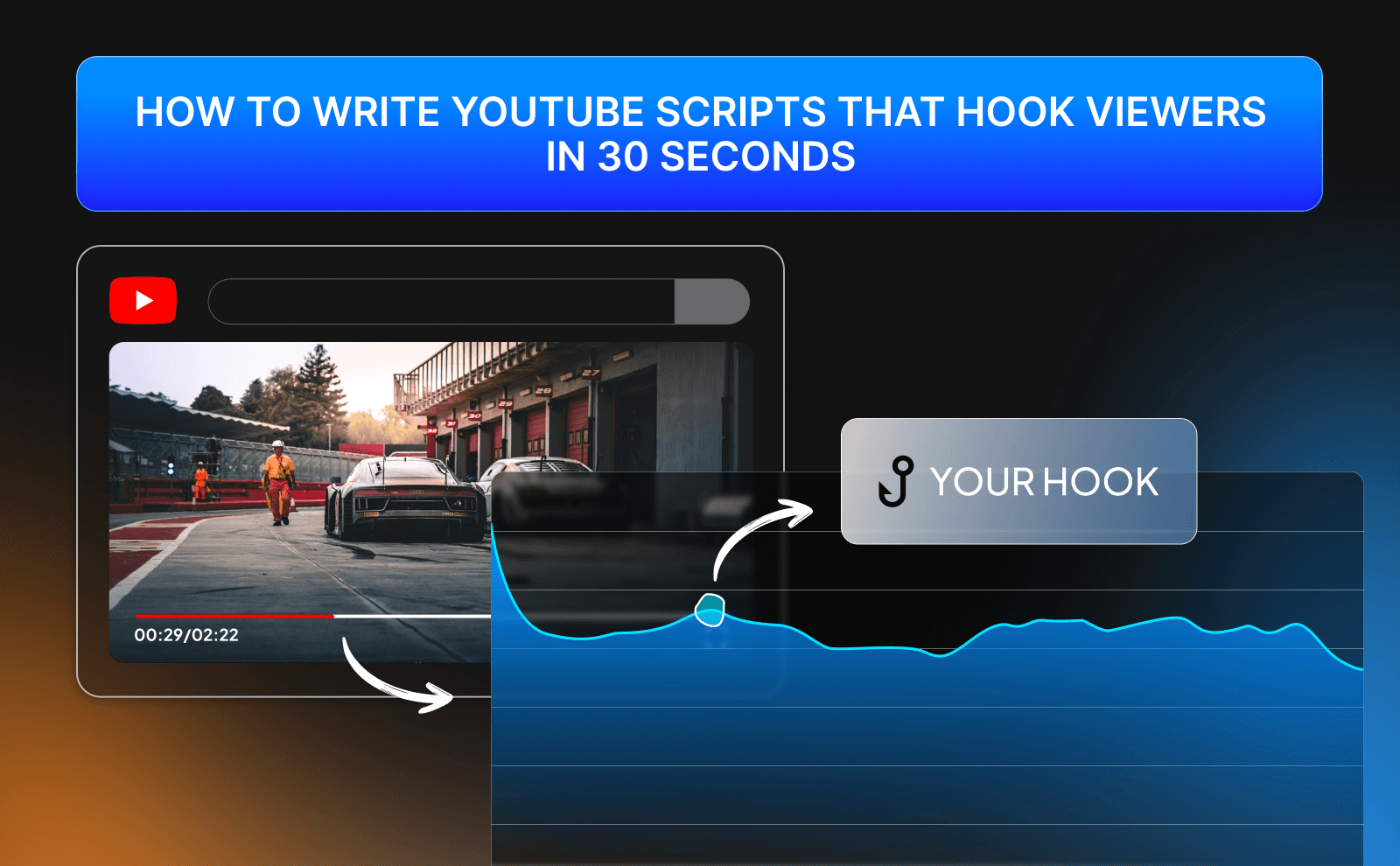
A YouTube script hooks viewers when it makes a specific, surprising promise in the first sentence, then raises the stakes inside the next 25 seconds. The largest drop-off on YouTube happens between second 0 and second 30, so the opening line is the only line most viewers actually weigh.
A working hook does three jobs in half a minute. Seconds 0 to 5 grab with a bold claim, a stat, or a mid-scene moment. Seconds 5 to 15 tell the viewer exactly what they get for staying. Seconds 15 to 30 add stakes, a question, or an open loop. If you want faster first drafts, an AI script generator can help you test different hook angles before choosing the strongest one.
Faceless channels carry an extra burden. No face delivers the line, so the visual does half the work. VidRush handles this by letting you lock in an exact hook line in your prompt. The platform then matches narration, visuals, and pacing in one 40-minute generation, so you can test five hook angles in the time it used to take to edit one.
How Do I Structure A Top-10 Listicle Video That Keeps Viewers Watching?
A high-retention Top 10 listicle video uses reverse-rank order, mini-hooks between items, and a teased payoff for #1 referenced inside the first 30 seconds. Counting up gives viewers a reason to stay.
Each item should run 60 to 90 seconds and end with a one-line tease of the next. A script to video tool can also help turn this structure into a finished video with narration, pacing, and matching visuals. VidRush has a native Listicle (Top 10) format that builds this structure automatically and caps any single clip at two uses across a video, so B-roll never repeats and retention stays flat.
How Do I Write Scripts For True Crime YouTube Videos?
A true crime YouTube script hooks hardest when it opens at the crime moment itself, not with biographical setup. Start with the 911 call, the discovery, the missing person report. Background belongs in the second act.
The 30-second hook should plant one unresolved question. Use voiceover-only delivery, archival photos, and a slow musical bed. VidRush handles documentary-style true crime well when public footage is abundant. For low-footage cases, switch to the Deep Video v1 Mini model, which assembles the video from images instead of B-roll.
How Do I Make Biographical YouTube Videos Without Boring The Viewer?
A biographical YouTube script retains viewers when you open at the subject's most dramatic moment, not their birth. Cold-open the assassination, the championship, the bankruptcy. Then loop back with "but to understand how we got here…"
The viewer gets a promised destination from second one. The middle fills in the path. VidRush documentary format scripts the cold-open, the flashback, and the payoff in a single generation when you include exact hook lines and research instructions in your prompt. For faceless channels, choosing the best AI video script generator for faceless videos makes it easier to build strong openings without relying on a presenter.
How Do I Make History Explainer Videos Without A Huge Budget?
A history explainer can be produced for under $3 per minute when AI narration and licensed stock libraries replace voiceover talent and footage costs. The hook works best when built around one specific tension: a battle, a betrayal, a single decision. Chronological context comes after the hook lands.
Stock and archival footage already covers most well-documented historical topics. VidRush sources from licensed libraries, narrates with 100+ AI voices including 25 VidRush-exclusive ElevenLabs voices, and produces a finished video at $1.95 to $2.72 per minute depending on plan.
FAQs
What's A Good Hook For A Faceless YouTube Video?
A good faceless YouTube hook pairs an opening line built on a specific number or contradiction with a punchy visual cut in the first 2 seconds. Skip "Welcome back, in today's video" entirely. Keep the hook line under 20 words. VidRush lets you lock the exact hook line in your prompt so the visual matches that phrasing, not a generic read.
How Long Should A Script Be For A 10-Minute YouTube Video?
A 10-minute YouTube script runs about 1,400 to 1,600 words at the standard 150 words-per-minute pace. Faceless documentary delivery sits closer to 140 WPM, so plan for 1,400 words. VidRush calculates this automatically when you set a target length between 6 and 40 minutes.
Should I Use AI To Write My YouTube Scripts?
AI works best for the structural draft of a YouTube script, with the hook and CTA hand-edited. Pure AI output is usually generic in the first 30 seconds, where retention is decided. The strongest workflow: generate the full video with VidRush, then rewrite only the first 30 seconds in your own voice before rendering.
A great hook makes one specific promise in five seconds, then raises the stakes by thirty so viewers stop clicking away and keep watching.