
Noah Morris
Co-Founder

Multilingual AI Voice Generator: How To Create Videos In Multiple languages Without Hiring Voice Actors
Most creators are leaving a huge amount of views, growth, and money on the table without even realizing it. You can spend hours making a great video, but if it’s only in one language, a massive part of the world simply can’t understand it. People won’t struggle to translate or guess what you’re saying, they’ll just scroll past. So even if your content is good, it ends up underperforming because it’s locked to one audience instead of reaching everyone it could.
The solution is actually simple now: use a multilingual AI voice generator. Instead of creating new content from scratch, you take your existing video and turn it into different languages with natural-sounding voiceovers. It’s one of the smartest ways to grow today, because you’re not working harder you’re just making your content accessible to more people.
What Is A Multilingual AI Voice Generator And Why Creators Need One In 2026?
A multilingual AI voice generator is basically a tool that can turn your text into speech in different languages using artificial voices that sound real. Instead of recording your own voice or hiring someone, you just paste your script, pick a language (like English, Spanish, or Arabic), choose a voice, and it reads it out for you. Some tools even let you change the tone, speed, and emotion so it doesn’t sound boring or robotic. If you're still exploring your options, checking out an AI voice generator can help you understand what's available and what works best for your content style.
The internet is global now, not just local. If you only post in one language, you’re ignoring a huge part of the audience. With these tools, you can take one video and turn it into multiple versions for different countries in minutes. That means more views, more reach, and more chances to grow without doing 10x the work.
How AI Voice Generators Actually Work Behind The Scenes?
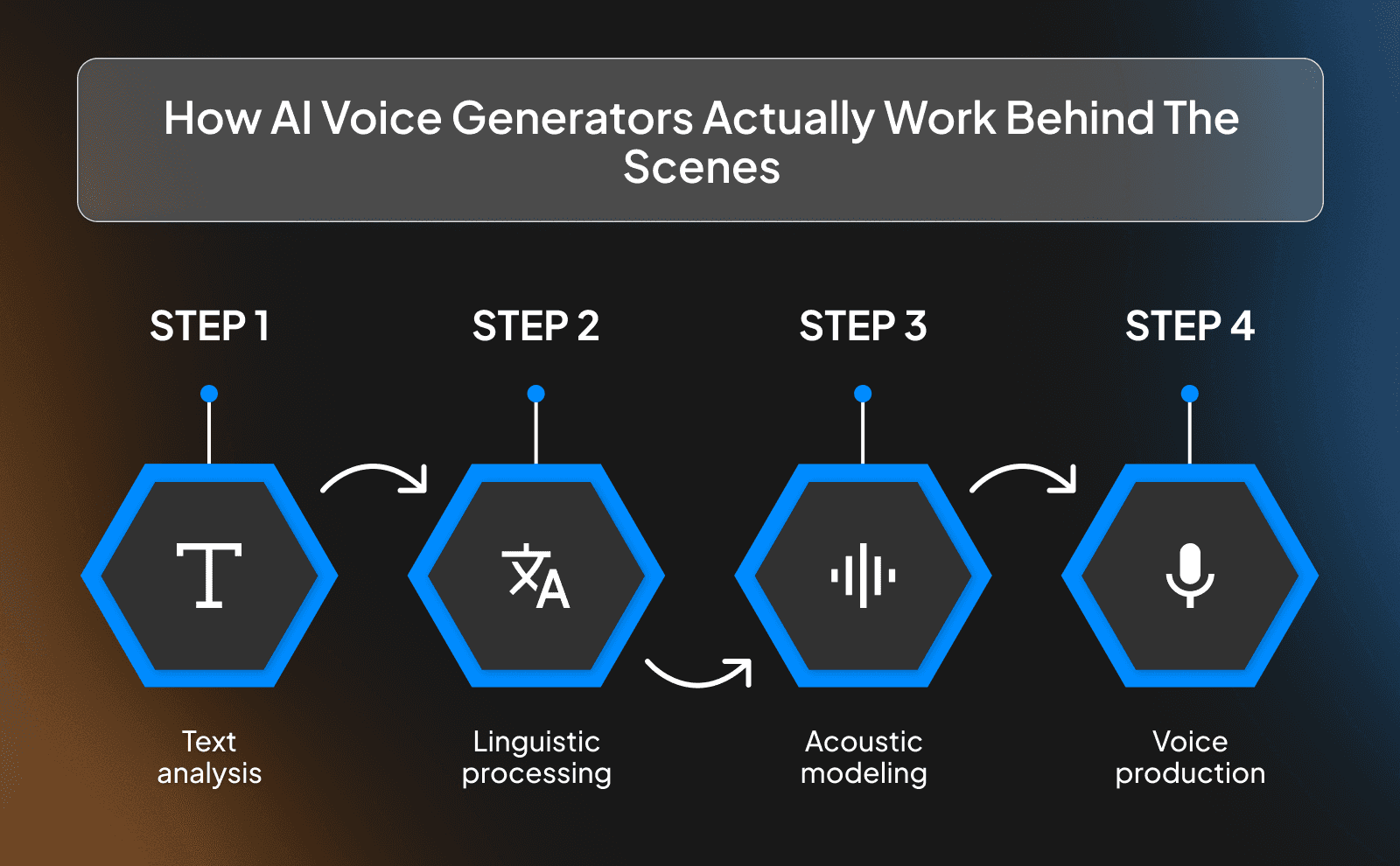
Behind the scenes, AI voice generators are trained on thousands of hours of real human speech. They learn how people talk: things like pronunciation, tone, pauses, and emotion. When you type something, the AI breaks your text into smaller parts, understands how it should sound, and then recreates it using patterns it learned from real voices. That’s why modern AI voices don’t sound flat like old robots, they actually feel natural.
There’s also something called “text-to-speech models” and “neural networks” doing the heavy lifting. You don’t need to understand the technical side, but just know this: the AI is predicting what a human would sound like saying your sentence, then generating it instantly. Some advanced tools even clone voices or match lip movements in videos. So what used to take hours of recording and editing can now be done in a few clicks.
Why Creators Do Not Need To Hire Voice Actors Anymore?
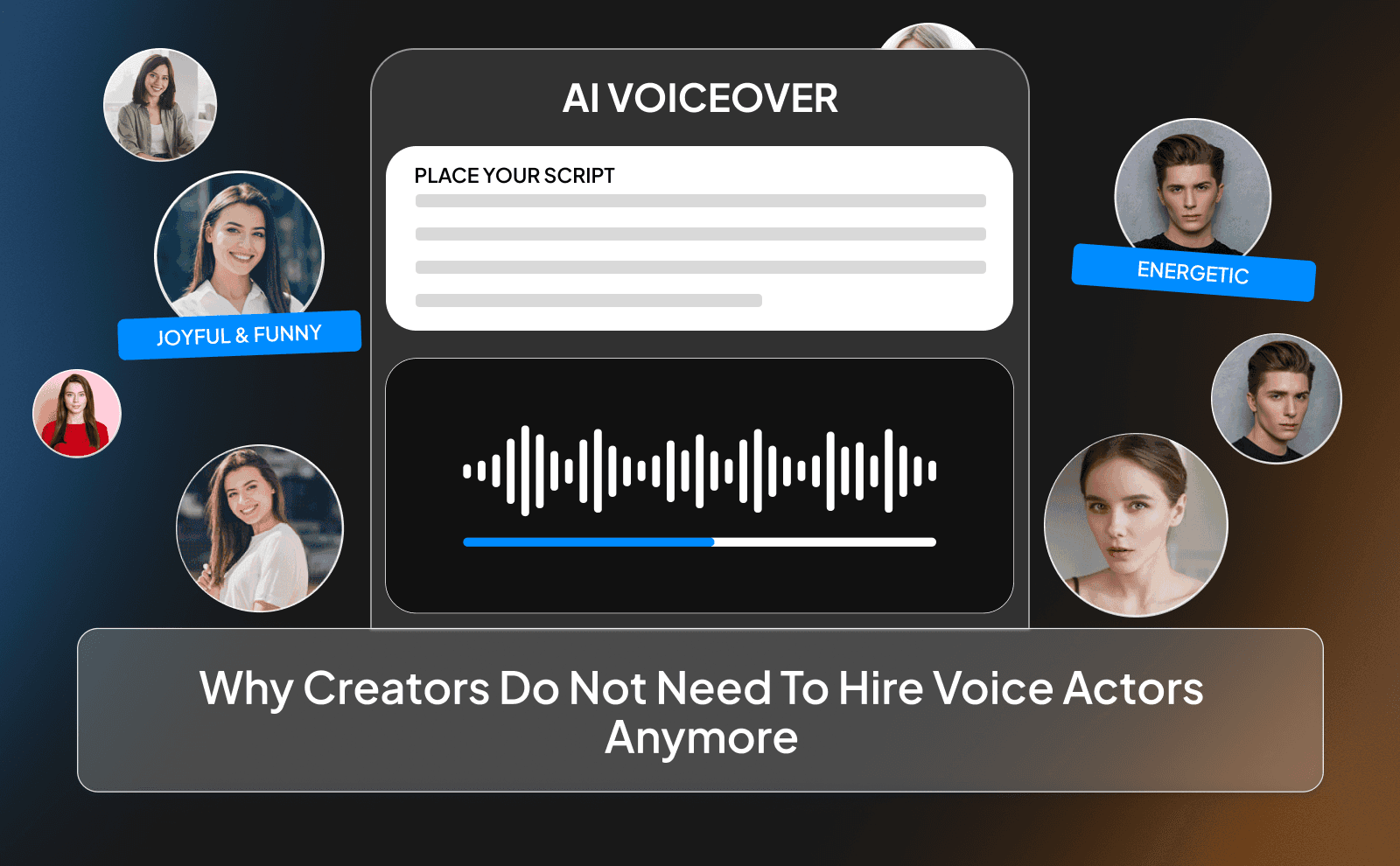
Hiring voice actors used to be the only option if you wanted professional audio. But it comes with problems. It's expensive, it takes time, and you often need revisions if something isn’t right. If you change one sentence in your script, you might have to re-record everything or wait for the actor again. That slows down your content a lot, especially if you’re posting regularly.
Now with AI voice generators, you can get high-quality voiceovers instantly. You can test different voices, change your script anytime, and fix mistakes in seconds. For most types of content, YouTube videos, TikToks, ads, tutorials, AI voices are more than good enough. If budget is a concern, there are plenty of options when it comes to the best free AI voice generator that still deliver solid quality for everyday content. Voice actors are still useful for movies or very emotional storytelling, but for everyday content creation, AI is faster, cheaper, and way more flexible.
The Growing Demand For Videos In More Than One Language
More people around the world are watching content than ever before, and they prefer watching it in their own language. If someone has to struggle to understand your video, they’ll just scroll away. That’s why creators who translate their content are growing much faster. they’re simply reaching more people without creating completely new content from scratch.
Platforms are also pushing global content more now. If your video performs well in one country, it can easily spread to others. But to really take advantage of that, you need to speak the audience’s language. That’s where multilingual videos come in. Instead of being stuck with one audience, you can build multiple audiences at the same time. And the creators who understand this early are the ones who win big.
How AI Voice Technology Creates Videos In Multiple Languages?
AI voice technology takes your original video and basically rebuilds it for different languages without you starting from scratch. First, it understands your script, then translates it into another language, and finally generates a voice that sounds natural in that language. Some tools even adjust the pacing so the new voice fits the timing of your original video, which makes everything feel smooth and not rushed or delayed. Understanding how AI video generation works at a deeper level can help you make better creative decisions when setting up your multilingual workflow.
What makes this powerful is that it’s all connected in one workflow. You don’t need separate translators, voice actors, and editors anymore. The AI handles everything in one place. So instead of making one video at a time, you can turn one piece of content into five or ten different versions in different languages, all in a fraction of the time it used to take.
Voice Cloning Keeps Your Brand Voice Consistent
Voice cloning lets you create a digital version of your voice or a specific voice you want to use for your content. Once it’s created, you can reuse it again and again across different videos and even different languages. So no matter where your audience is from, they still feel like they’re hearing the same person every time.
This is huge for building a brand. People recognize voices just like they recognize faces. If your voice keeps changing, it can feel disconnected. But with voice cloning, you stay consistent while still expanding globally. It’s like scaling your content without losing your identity.
Emotional Tone Transfer Across Different Languages
One of the biggest problems with old translations was that they sounded flat. The words were correct, but the feeling was gone. New AI voice tools are getting much better at keeping the emotion of your original voice, whether it’s excitement, seriousness, or storytelling vibes.
This means your message actually lands the same way in different languages. If your original video feels inspiring or funny, the translated version can carry that same energy. That’s what keeps people engaged, because they’re not just understanding the words, they’re feeling them too.
Lip Sync And Audio Video Alignment Done By AI
Lip sync used to be one of the hardest parts of dubbing videos. If the voice didn’t match the mouth movements, it looked weird and low quality. Now AI can adjust the audio timing or even tweak the video slightly so everything lines up naturally.
This makes multilingual videos feel much more professional. Viewers don’t get distracted by mismatched audio and visuals. Everything feels clean and intentional, even though it was done automatically. That’s a big reason why AI-generated videos are starting to compete with high-end productions.
AI Dubbing Vs Subtitles Which Option Wins For Global Reach
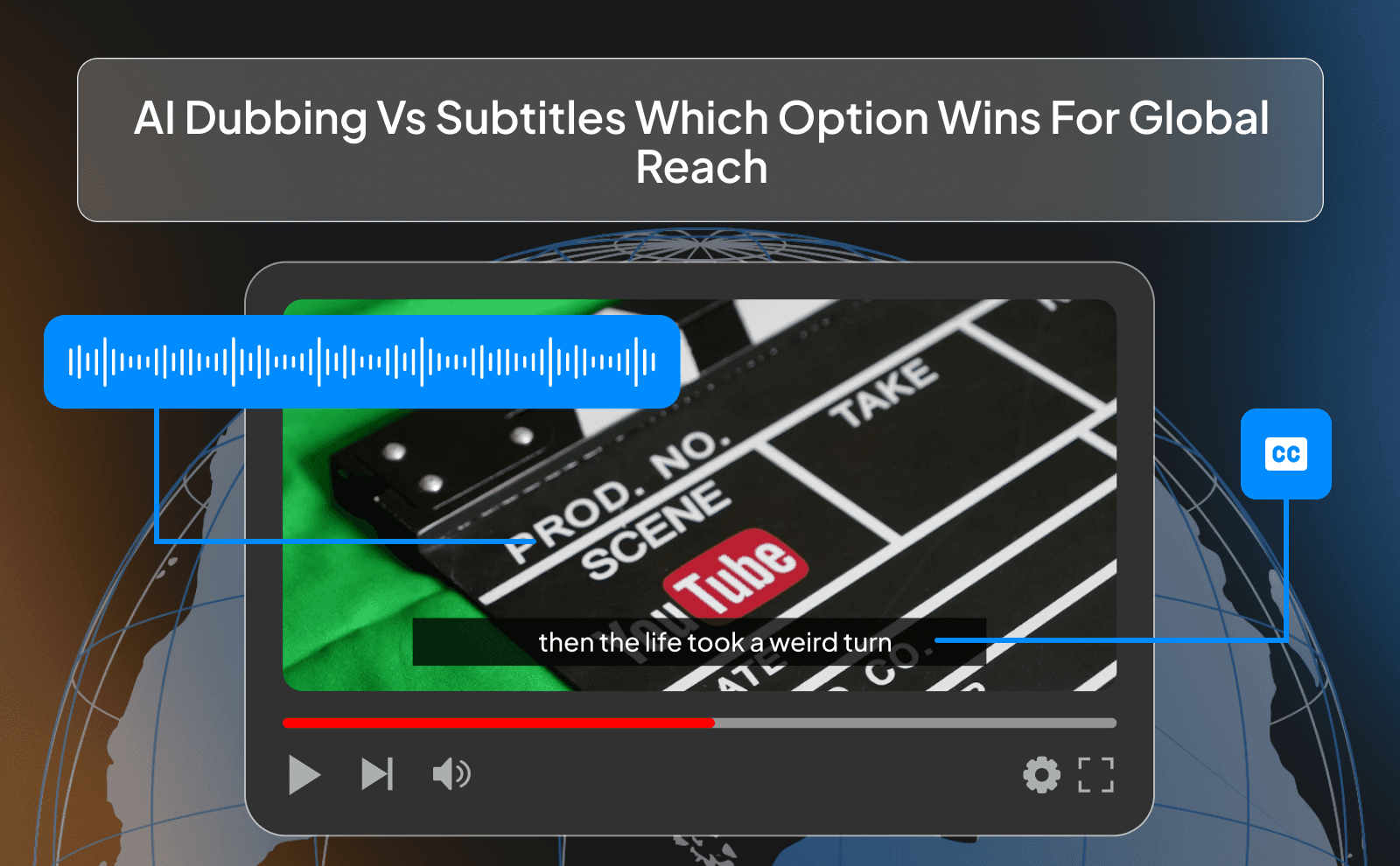
AI dubbing and subtitles both help you reach more people, but they don’t work the same way. Subtitles are quick and easy you just add text and you’re done. But they require people to read, and not everyone wants to do that, especially on short-form content.
AI dubbing, on the other hand, replaces your voice with a translated version. This makes the video feel native to the viewer. For global reach, dubbing usually wins because it keeps people engaged longer. When people can just listen without effort, they’re more likely to stay and watch the whole video.
When Subtitles Alone Are Enough For Your Audience?
Subtitles can still be a great option in certain situations. If your audience already understands some of your language, subtitles help fill the gaps without changing the whole video. They’re also useful for platforms where people watch without sound, like scrolling on their phone in public.
They’re also faster to produce. If you need to move quickly and test content in different markets, subtitles are a solid starting point. You can always upgrade to dubbing later once you know a certain audience is worth investing more into.
When AI Dubbing Tool Works Much Better Than Subtitles?
AI dubbing works best when you want full attention from your audience. Long videos, storytelling content, tutorials, and anything that requires focus will perform better when people can just listen instead of read.
It’s also much better for audiences who don’t understand your original language at all. Subtitles won’t help if someone can’t keep up with reading or just doesn’t want to. Dubbing removes that barrier completely and makes your content feel local, not foreign.
Times When Using Both Together Gets You The Best Results
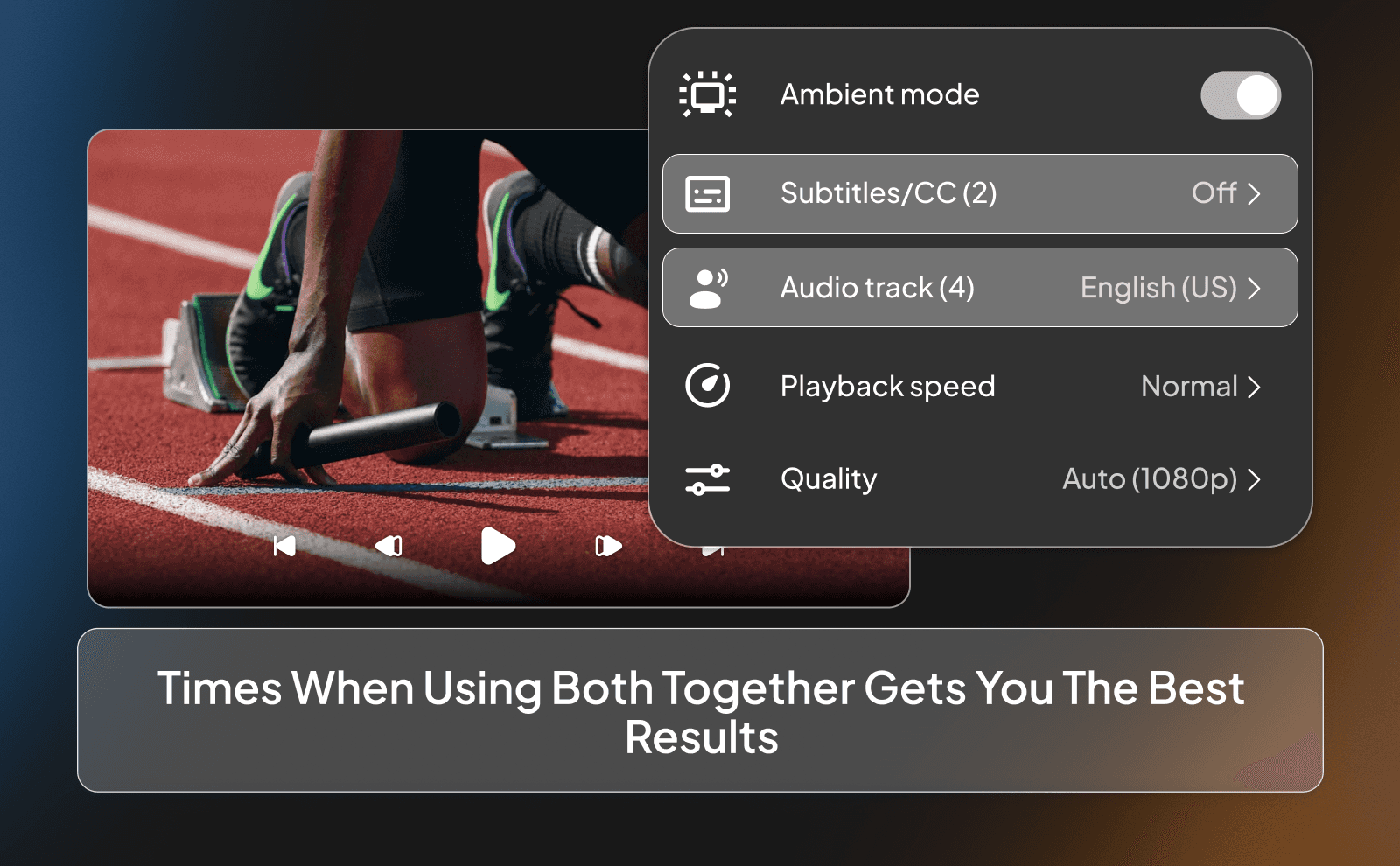
Sometimes the best move is to use both dubbing and subtitles together. This gives viewers options. They can listen to the dubbed voice while also reading along, which improves understanding and keeps them engaged.
This works especially well for educational content or complex topics. It also helps with accessibility for people who prefer reading or have hearing issues. Using both at the same time makes your content stronger and more flexible for different types of viewers.
Step By Step Guide To Create Video In Multiple Languages AI Style
Preparing Your Source Video And Script The Right Way
Everything starts with a clean script. If your original script is messy or unclear, the translation will also be messy. Keep your sentences simple, clear, and easy to understand. This makes it easier for AI to translate it properly.
Also make sure your audio is clear if you’re using an existing video. Background noise or bad quality can affect how well the AI understands your content. The better your input, the better your final result will be.
Using An AI Voiceover Translation Tool To Convert Your Content
Once your script is ready, you upload it or your video into an AI tool that handles translation and voice generation. The tool will convert your text into different languages and generate matching voiceovers automatically.
Most tools let you preview the result instantly. This is where you can quickly see how your content sounds in different languages without waiting days for production. It’s fast, simple, and saves a lot of effort.
Picking Voice Settings, Accents, And Cloning Options
Choosing the right voice matters more than people think. You can pick different accents, tones, and styles depending on your audience. For example, a formal voice might work better for training videos, while a casual tone works better for YouTube.
If you’re using voice cloning, this is where you apply it. You can keep your own voice across all languages or choose a specific brand voice. The goal is to match your content style and make sure it feels natural to the audience.
Reviewing Translations And Fixing Pronunciation Issues
Even though AI is powerful, it’s not perfect. You should always review your translations before publishing. Sometimes small words or names might not sound right, especially in different languages.
Most tools let you fix pronunciation easily by adjusting spelling or adding notes. This step doesn’t take long, but it makes a big difference in quality. It’s what separates average content from great content.
Exporting Your Final Multilingual Videos
Once everything looks good, you export your videos in different language versions. Most tools let you download separate files for each language or even combine them into one video with multiple audio tracks.
After that, you can upload them to different platforms or target different regions. This is where all your work pays off, because now you have multiple pieces of content from just one original video.
Where A Multilingual AI Voice Generator Helps The Most ?
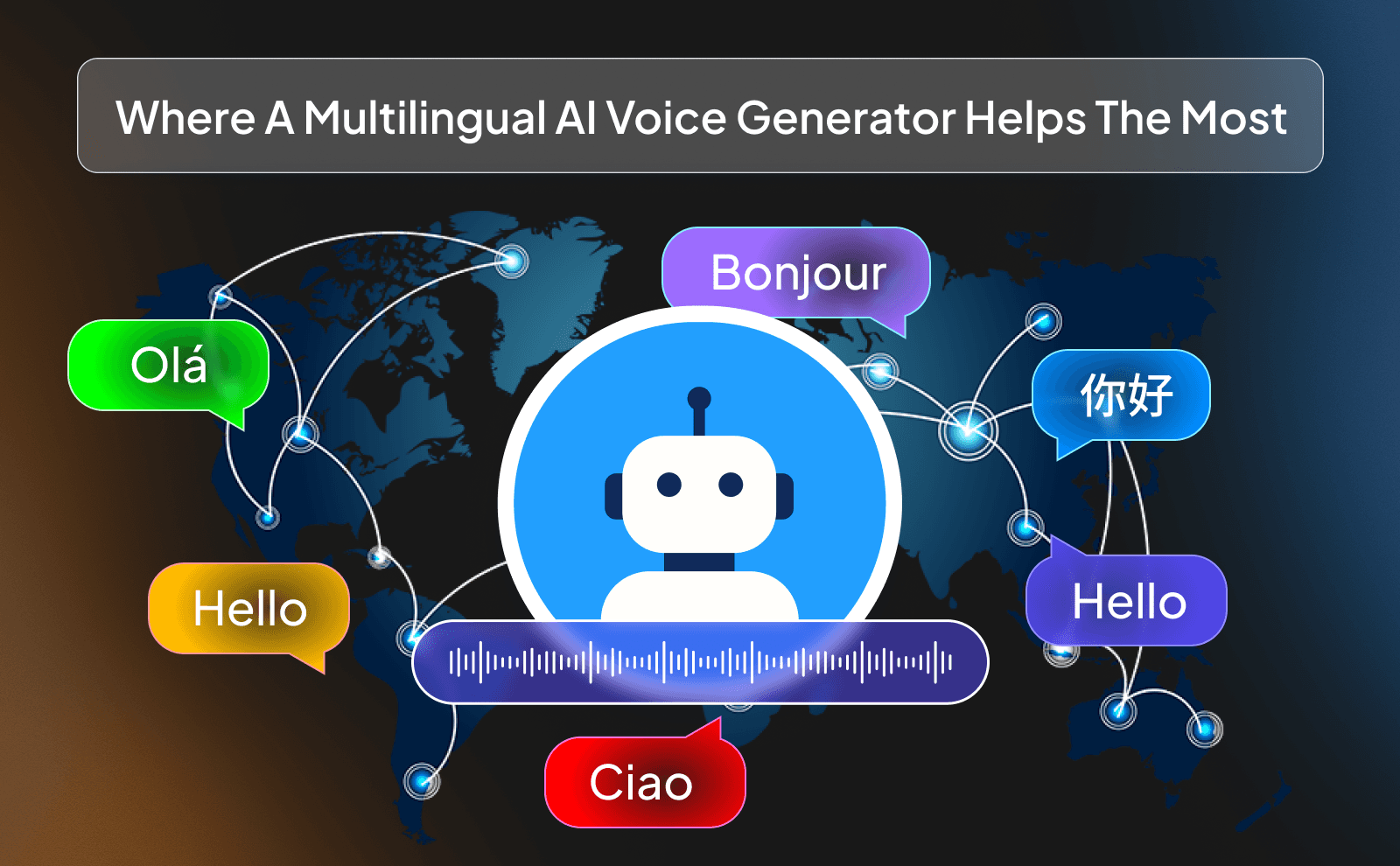
Multilingual AI voice tools are useful anywhere you need to reach people from different backgrounds. Instead of limiting your message to one group, you can spread it across multiple regions easily.
This is especially valuable for creators, businesses, and educators who want to grow fast without increasing their workload too much. The right AI content creation tools can make this entire process much smoother, from translation to voiceover to final export. It’s all about doing more with the same content.
YouTube Creators Who Want To Go Global Without Burnout
For YouTube creators, making content is already time-consuming. Recording, editing, scripting, it all adds up. Adding multiple languages manually would normally be overwhelming.
AI solves that by letting you reuse your content. You don’t need to film again or record new audio. You just convert your existing videos into new languages and reach a wider audience without burning out. This approach works especially well if you're already creating faceless videos with AI, since there's no on-camera footage to worry about syncing or re-recording.
Corporate Training And Employee Onboarding Across Regions
Companies with teams in different countries often struggle to train everyone properly. Language barriers can slow things down and cause misunderstandings.
With AI voice tools, training videos can be translated and adapted quickly. Every employee gets the same message in their own language, which improves clarity and saves time for the company.
Marketing Campaigns Built For International Markets
Marketing works best when it feels local. People connect more with content that speaks their language and matches their culture.
AI voice tools make it easy to adapt campaigns for different regions. Instead of creating separate campaigns from scratch, you can adjust one campaign for multiple markets and keep your message consistent. Using AI for marketing video content makes it even easier to test different languages and formats without stretching your production budget.
E-Learning Platforms, Online Courses, And Explainer Videos
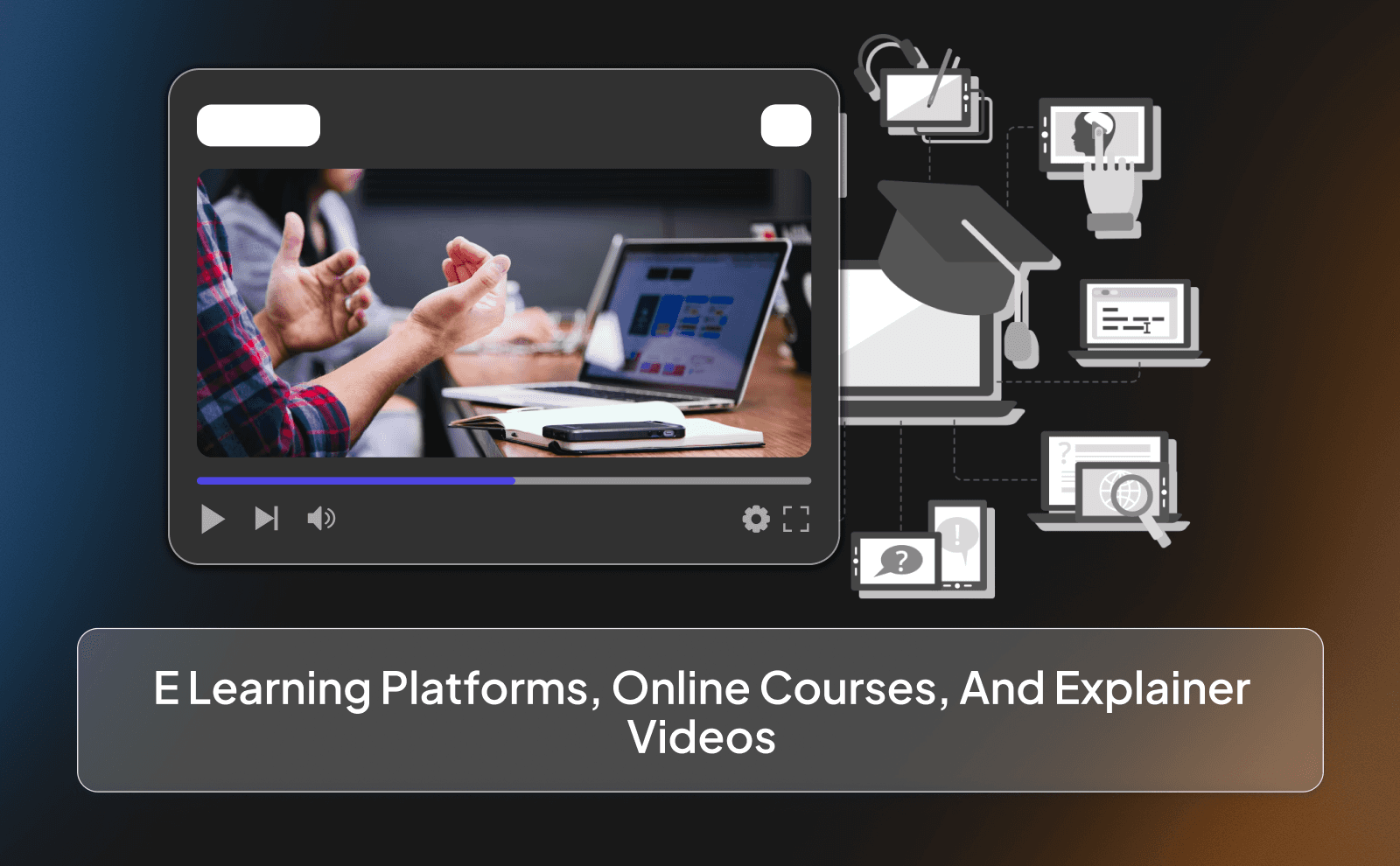
Online education is growing fast, and people from all over the world are joining courses. If your content is only in one language, you’re limiting your reach.
With multilingual AI voices, you can offer your courses in different languages without re-recording everything. This makes your content accessible to more people and increases your potential audience.
AI Voice Localization Vs Traditional Dubbing The Honest Comparison
Traditional dubbing involves hiring translators, voice actors, and editors. It takes time, coordination, and a lot of money. It can still produce great results, but it’s not very flexible.
AI localization, on the other hand, is faster and easier to scale. The broader debate around AI vs human content creation is worth looking into if you want to understand where AI fits best and where human input still makes a difference. You can make changes instantly and produce multiple versions quickly. It may not replace high-end dubbing in every case, but for most content, it’s more practical.
Cost Per Language And What You Really Save
With traditional dubbing, every new language adds more cost. You’re paying for new voice actors, studio time, and editing again and again.
AI tools usually charge a flat fee or subscription, which makes adding new languages much cheaper. Over time, the savings add up a lot, especially if you’re producing content regularly.
Time Required To Finish A Full Multilingual Video
Traditional workflows can take days or even weeks to finish one multilingual video. There are too many steps and people involved.
AI can do the same thing in hours or even minutes. This speed lets you move faster, test more ideas, and stay consistent with your content schedule.
Voice Quality, Consistency, And Scalability Across Many Languages
Voice quality used to be a weak point for AI, but it has improved a lot. Modern tools sound natural enough for most types of content.
The biggest advantage is consistency and scalability. You can keep the same voice style across all your videos and languages, which is hard to do with different human actors. And you can scale without limits.
Common Problems Creators Face And How AI Voice Tools Fix Them
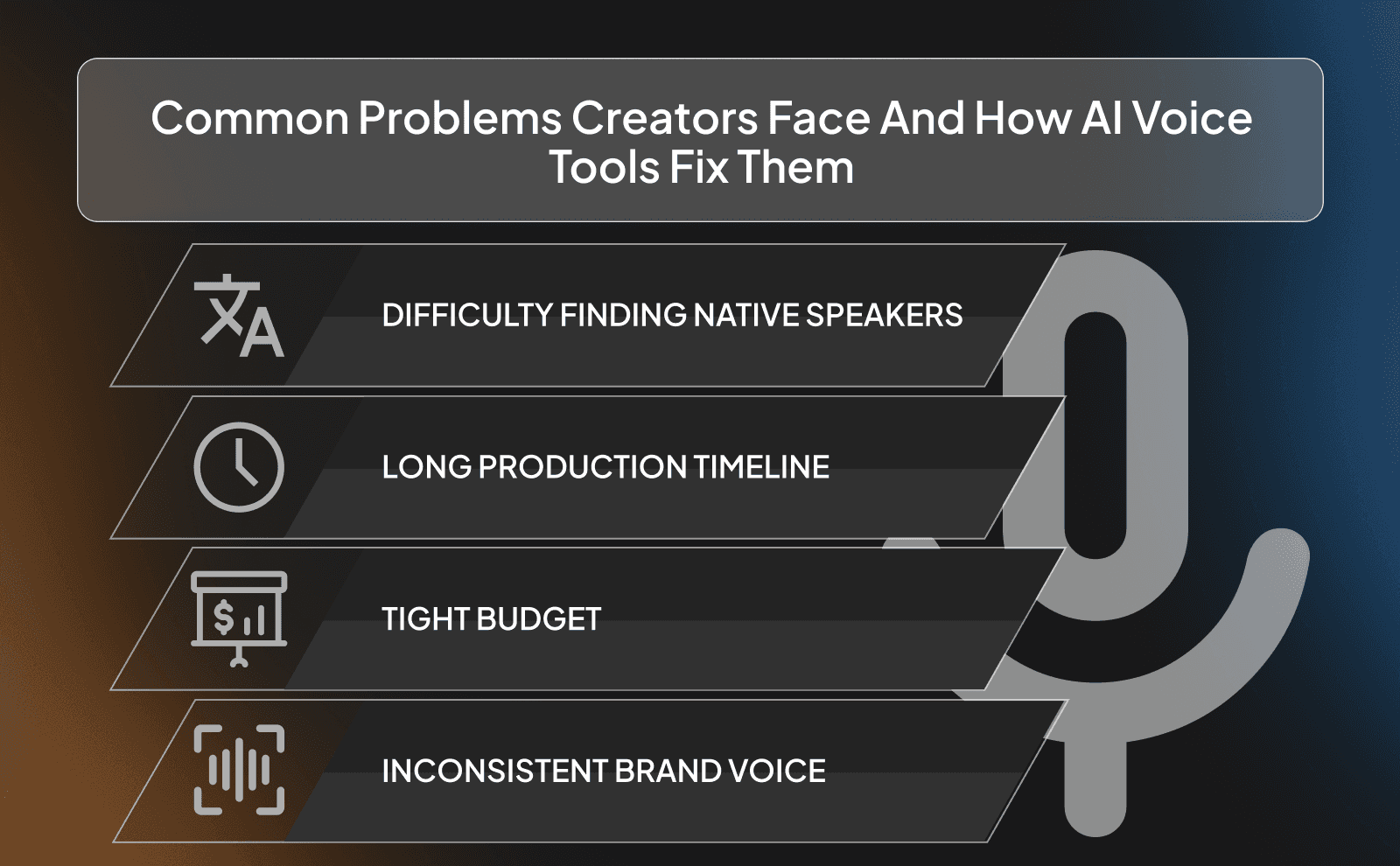
Tight Budgets That Cannot Cover Multiple Voice Actors
Hiring voice actors for different languages can get expensive very quickly. For small creators, it’s often not even an option.
AI tools offer a much cheaper alternative. You can create multiple voiceovers without spending a lot, which makes it possible to scale even with a limited budget.
Long Production Timelines That Slow Down Launches
Waiting days or weeks for voiceovers can delay your entire project. This is a big problem if you’re trying to stay consistent or follow trends.
AI speeds everything up. You can generate voiceovers almost instantly and keep your workflow moving without delays.
Finding Native Speakers For Rare Or Regional Languages
Some languages are harder to find voice actors for, especially regional ones. This makes it difficult to expand into certain markets.
AI tools often support a wide range of languages and accents. This makes it easier to reach audiences that were previously hard to access.
Keeping One Brand Voice Across All Your Videos
Using different voice actors can make your content feel inconsistent. Each voice has its own style, which can confuse your audience.
AI voice cloning solves this by keeping one consistent voice across everything. No matter the language, your content feels like it’s coming from the same source.
How To Choose The Best Multilingual AI Voice Tool 2026 For Your Needs
There are many AI voice tools out there, and they’re not all the same. Some focus on quality, others on speed, and some on specific features.
The best choice depends on your goals. You need to pick a tool that matches your content style, budget, and how much you plan to scale.
Key Features To Look For Before You Pay For A Tool
Look for features like realistic voices, multiple language support, voice cloning, and easy editing options. These will make your workflow smoother.
Also check if the tool allows quick previews and simple corrections. Small features like this can save you a lot of time in the long run.
Pricing, Language Support, And What Actually Matters Long Term
Pricing matters, but it’s not just about the cheapest option. You need to think about long-term value and how often you’ll use the tool.
Language support is also important. Make sure the tool covers the languages you actually want to target. A cheap tool is useless if it doesn’t support your audience.
Mistakes People Make When Picking An AI Voice Platform
One common mistake is choosing a tool based only on price. Cheap tools often have poor quality voices, which can hurt your content.
Another mistake is not testing the tool properly before committing. Always try demos, test different voices, and make sure it fits your needs before you rely on it.
Conclusion
At this point, multilingual AI voice tools are not some “nice extra”, they’re becoming a core part of how smart creators grow. You’re no longer limited by language, budget, or time. One piece of content can turn into multiple versions that reach completely different audiences around the world, without doubling your workload. That’s a huge advantage, especially if you’re trying to grow fast and stay consistent.
Frequently Asked Questions
What Is A Multilingual AI Voice Generator And How Does It Help Video Creators
It’s a tool that turns your script into natural voiceovers in different languages so you can reach a global audience without extra recording.
How Many Languages Can An AI Voice Generator Multiple Languages Tool Support
tools like ElevenLabs and VidRush support dozens of languages, often 20 to 70+ depending on the platform.
Which AI voiceover Translation Tool Gives The Most Natural Sounding Results
ElevenLabs is known for the most natural voices out of all tools out there
How Long Does It Take To Create Video In Multiple Languages AI Can Handle
It can take anywhere from a few minutes to a couple of hours depending on the length of your video.
Is An AI Dubbing Tool Better Than Hiring Real Voice Actors For My Brand
For most creators, yes it’s faster, cheaper, and easier to scale, but voice actors still win for high-end emotional content.
Does Multilingual Text To Speech Sound Natural Or Robotic In 2026
In 2026, good tools like ElevenLabs sound very natural and are hard to tell apart from real voices.
How Does AI Voice Localization Handle Different Accents And Regional Dialects
It uses trained voice models to match accents and speaking styles based on the region you choose.
Can I Use My Own Cloned Voice To Translate Video With AI Voice Across Languages
Yes, tools like ElevenLabs let you clone your voice and use it across different languages.
Is AI Voice For Global Audience Accepted On YouTube, Instagram, And TikTok
Yes, AI voice content is widely accepted as long as your content follows platform rules and adds value.
When Should I Choose AI Dubbing Vs Subtitles For My Videos
Use dubbing for better engagement and subtitles for quick, simple translations or silent viewing.
How Much Does Using The Best Multilingual AI Voice Tool 2026 Usually Cost
Most tools range from $10 to $100+ per month depending on features and usage.
What Video Formats Work Smoothly With AI Voice Tools
Common formats like MP4, MOV, and AVI work smoothly with most tools including VidRush.
How Does VidRush Fit Into My Multilingual Video Workflow
VidRush helps you handle translation, voiceover, and syncing in one place so you can turn one video into multiple languages quickly.
Use a multilingual AI voice generator to create natural video voiceovers in many languages, grow faster, and reach global audiences.